|
Visual Art Movements A–ZIn the late nineteenth century, modern art styles were classified into ‘isms’, categories defined by art critics. In the twentieth century, new isms and movements sprang from manifestos written by the artists themselves. Hans Arp and El Lissitzky described sixteen isms of the European avant-garde in their book The Isms of Art (Die Kunstismen) in 1925. In the early twenty-first century, isms were applied retrospectively, redefining previous artistic periods, interpreting genres as isms, and assigning new labels to existing artistic trends. There was also a reaction against this ‘ismatic’ tendency. Some isms — Impressionism, Cubism, Surrealism, Abstract Expressionism, Modernism, and Postmodernism — are among the most influential movements in modern art, though many others are largely undocumented. Dozens of isms, from the most prominent to the most obscure examples, are described here, organised alphabetically. Painting, cinema, architecture, and photography isms are all included, making this the most extensive glossary of visual art movements.  AdhocismArchitect Charles Jencks coined the term Adhocism in 1968, and co-wrote Adhocism: The Case for Improvisation (1972) with Nathan Silver. Jencks and Silver viewed Adhocism as the democratisation of design: “Meaningful articulation is the goal of adhocism. Opposed to purism and exclusivist design theories, it accepts everyone as an architect and all modes of communication, whether based on nature or culture.” Inspired by Jencks, Tim Parsons and Jessica Charlesworth organised an exhibition titled Adhocism in Chicago, Illinois in 2011. AestheticismAestheticism was a late nineteenth century cultural movement dedicated to the production of l’art pour l’art (Theophile Gautier’s motto, ‘art for art’s sake’). The British equivalent of French Symbolism, its influence ranged from literature and painting to the decorative arts and interior design. Leading aesthetes included playwright Oscar Wilde, illustrator Aubrey Beardsley, and painter James McNeil Whistler. Whistler’s portrait Arrangement in Gray and Black: The Artist’s Mother (1871) is arguably the most famous painting in American art. American IndieismAmerican Indieism is one of several ersatz isms coined by Ronald Bergan in his book Film Isms... Understanding Cinema (2011). It describes the movement more conventionally known as American independent cinema. Anti-MilitarismAnti-Militarism is one of several isms coined by Ronald Bergan in his book Film Isms... Understanding Cinema (2011). It describes the genre more conventionally known as anti-war films. ApocalypticismApocalypticism is Alan Kirby’s derisive term for the ease with which Hollywood directors use computer-generated imagery to create apocalyptic films. He discussed this in his book Digimodernism (2009). Asian MinimalismAsian Minimalism is one of several isms coined by Ronald Bergan in his book Film Isms... Understanding Cinema (2011). It describes a trend more conventionally known as Slow Cinema. Avant-GardismAvant-Gardism is one of several ersatz isms coined by Ronald Bergan in his book Film Isms... Understanding Cinema (2011). It describes films made by artists, and those released on the arthouse circuit. BiographismBiographism is one of several ersatz isms coined by Ronald Bergan in his book Film Isms... Understanding Cinema (2011). It describes the film genre more conventionally known as biopics. 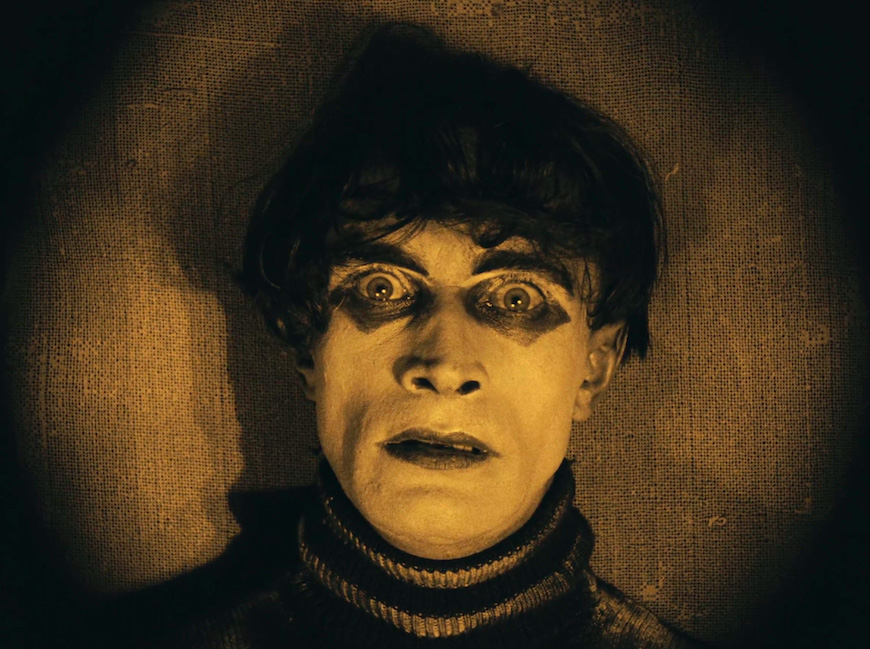 CaligarismCaligarism (Caligarisme) describes the impact of the German Expressionist film The Cabinet of Dr. Caligari (Das Cabinet Des Dr. Caligari), directed by Robert Wiene in 1919. Caligari was extremely stylised, with painted, distorted sets reminiscent of avant-garde theatre. Subsequent Expressionist films were less radical in their production design, though Expressionism dominated German cinema throughout the 1920s. CarnivalismThe Carnivalism film presentation in Bangkok, part of Assumption University’s 2011 degree show, applied the term Carnivalism to new-media art. The name was derived from Russian philosopher Mikhail Bakhtin’s notion of the carnivalesque, his concept of subversive, chaotic, and grotesque literature. CartoonismCartoonism is one of several ersatz isms coined by Ronald Bergan in his book Film Isms... Understanding Cinema (2011). It describes the film genre more conventionally known as cartoons or animation. Catalan ModernismCatalan Modernism is an alternative term for Modernisme. ChromoluminarismChromoluminarism is an alternative term for Pointillism. CloisonnismCloisonnism (Cloisonnisme) was a late nineteenth century style of painting developed by Émile Bernard and Louis Anquetin. Their works, influenced by Gothic stained glass and cloisonné enamels, contain saturated colours separated by bold outlines, and are also notable for their lack of perspective. The term — with an alternate spelling — was coined by Édouard Dujardin in his essay Le cloisonismé (1888), in which he noted that Antequin’s work “resembles painting by compartments, analogous to the cloisonné manner, and such a technique consists in a sort of cloisonnism.” CorrectionismChris Seddon published a magazine titled Correctionism in 2010. According to Seddon’s definition, “Correctionism is the term given to any form of mark-making produced with the sole intention of blocking-out of covering up illicit urban art.” He photographed public spaces in which graffiti had been whitewashed or otherwise removed, thus Correctionism was a response to street artists such as Banksy (Existencillism) and Invader (Rubikcubism). Costume RomanticismCostume Romanticism is one of several isms coined by Ronald Bergan in his book Film Isms... Understanding Cinema (2011). It describes the film genre more conventionally known as period drama.
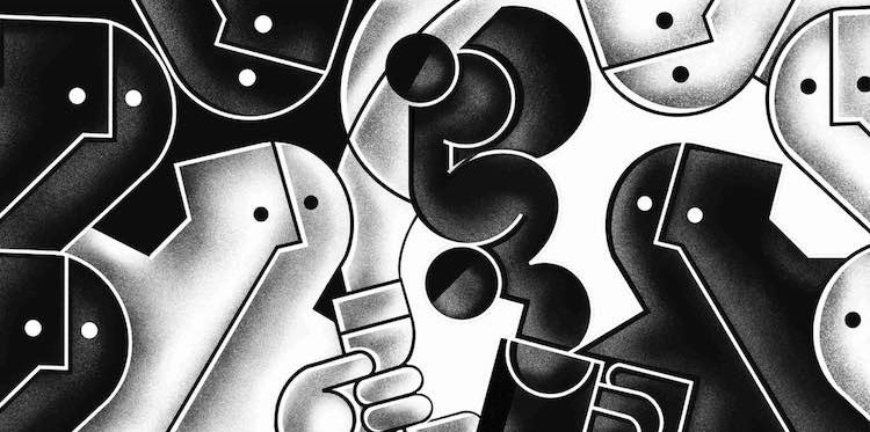 Cu(te)bismKant Kantawat, known as Mr Halfman, showed paintings in a style he called Cu(te)bism at his Another Side by Another Side exhibition in Bangkok in 2025. Cu(te)bism is a portmanteau of Cubism and ‘cute’. CultismCultism is one of several ersatz isms coined by Ronald Bergan in his book Film Isms... Understanding Cinema (2011). It describes films more conventionally known as cult classics. DataismDataism, like Neroism, was proposed by Icon magazine (no. 50) in August 2007 as a successor to Modernism. Both proposals are rather dystopian, though they were also intended to be ironic. Dataism described the automatic generation of ergonomic designs by computers, after data is entered via design software. It represented “the final victory of the numerate over the literate.” DefastenismDefastenism was inaugurated in 2004 with a Defastenist Party Manifesto written by Gary Farrelly, Pádraic E. Moore, and Alexander Reilly. Farrelly produced a series of works featuring clocks displaying different time zones, including International Clocks (2007). The Defastenists were certainly dedicated to their cause, with their manifesto emphasising their “complete fanaticism” and pledging their “fundamental faith in the Utopian functions of art.” Digimodernism
Alan Kirby introduced the term Pseudo-Modernism in a 2006 journal paper, The Death of Postmodernism and Beyond, in which he argued that increased audience participation and online interactivity resulted in a banal and sensationalist entertainment culture. In 2009, he replaced it with a new term, Digimodernism. DivisionismDivisionism is an alternative term for Pointillism. DocumentarismDocumentarism is one of several ersatz isms coined by Ronald Bergan in his book Film Isms... Understanding Cinema (2011). It describes the genre more conventionally known as documentary films.
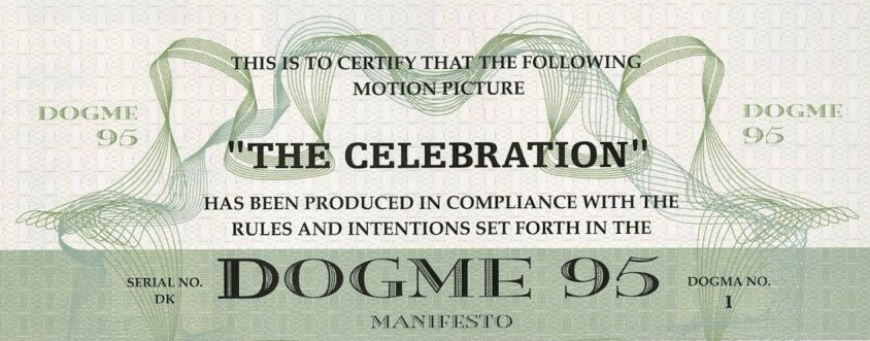 DogmetismDogmetism is one of several ersatz isms coined by Ronald Bergan in his book Film Isms... Understanding Cinema (2011). It describes the Danish film movement more conventionally known as dogme ’95. DisasterismDisasterism is one of several ersatz isms coined by Ronald Bergan in his book Film Isms... Understanding Cinema (2011). It describes the genre more conventionally known as disaster movies. EmotionalismEmotionalism is one of several isms coined by Ronald Bergan in his book Film Isms... Understanding Cinema (2011). It describes films that elicit strong emotions from their viewers. 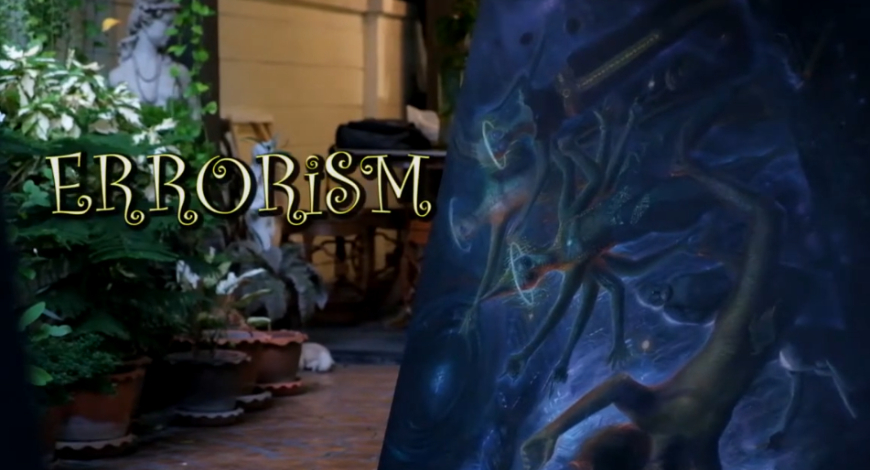 ErrorismThe group exhibition Errorism was held in Bangkok in 2017 and featured four young Thai artists, all with contrasting styles: Patt Yingcharoen, Kamolchat Pangtho, Nattiwut Choomanowat, and Sakarin Sukmanatham. The exhibition title refers to false assumptions based on knowledge passed down through generations being applied to changing social contexts. Errorism has subsequently been used as an exhibition title by Agnieszka Kurant in Belgium (in 2021) and Bou Haidar in Lebanon (in 2026).
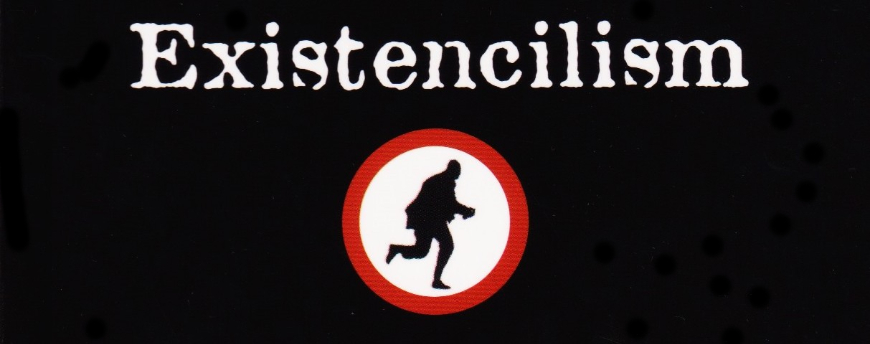 ExistencilismExistencilism is a pun on ‘existentialism’ and ‘stencil’. Existencilism was also the title of an exhibition by Banksy held in Los Angeles, California, in 2002. Like Invader, who created Rubikcubism, Banksy helped to legitimise graffiti as an art form. Film NoirismFilm Noirism is one of several ersatz isms coined by Ronald Bergan in his book Film Isms... Understanding Cinema (2011). It describes the genre more conventionally known as film noir. FXismFXism is one of several ersatz isms coined by Ronald Bergan in his book Film Isms... Understanding Cinema (2011). It describes films that rely on special effects to impress their audiences. Gagasmicism
Gagasmicism, a portmanteau of Lady Gaga and ‘orgasmic’, was a neologism coined by Pan-Pan Narkprasert for his Gagasmicism exhibition held in Bangkok in 2011. The artist was inspired by a Lady Gaga concert he had attended in New York, and he created a collection of intricate sculptures depicting Gaga as a deity. GangsterismGangsterism is one of several ersatz isms coined by Ronald Bergan in his book Film Isms... Understanding Cinema (2011). It describes the genre more conventionally known as gangster films. Hollywood StudioismHollywood Studioism is one of several ersatz isms coined by Ronald Bergan in his book Film Isms... Understanding Cinema (2011). It describes films made under the Hollywood studio system mode of production. HorrorismHorrorism is one of several ersatz isms coined by Ronald Bergan in his book Film Isms... Understanding Cinema (2011). It describes the genre more conventionally known as horror films.
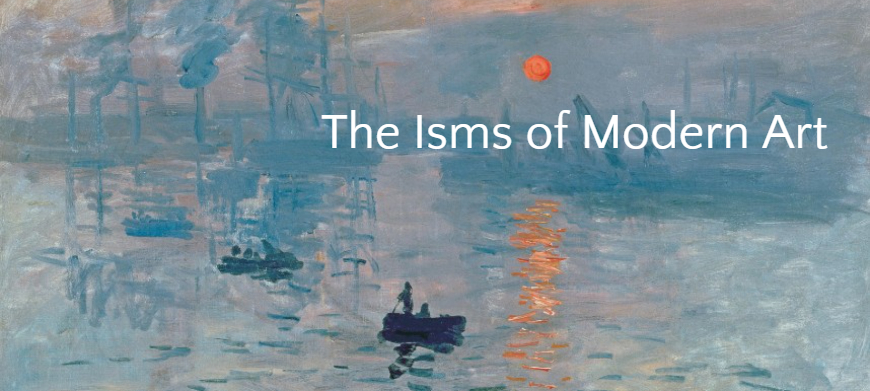
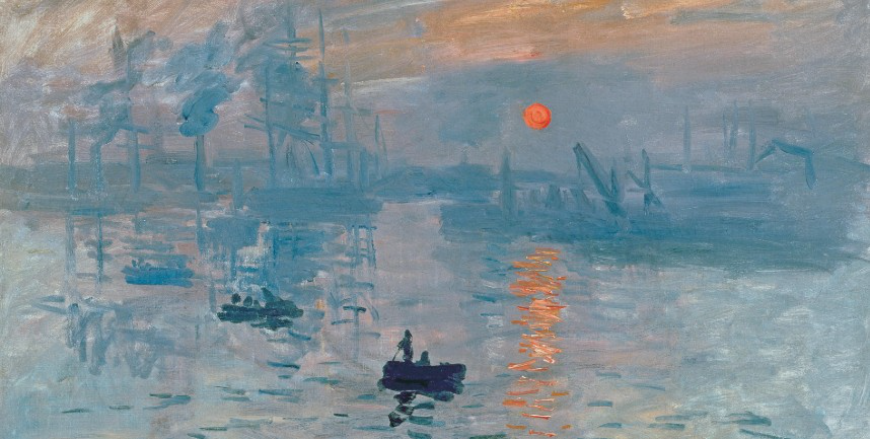 ImpressionismImpressionism (Impressionnisme) takes its name from Claude Monet’s painting Impression, Sunrise (Impression, soleil levant, 1872). The painting was first shown in 1874, when Monet and a small group of his contemporaries held an independent exhibition to compete with the conservative Salon de Paris.
 IsanismBwild Isan, a group of designers in northeast Thailand, organised a photography workshop titled Isanism: From Isan Roots to Global Views that took place on 26th June 2026. The event was a launchpad for the group’s concept of Isanism (อีสานนิยม), promoting the contemporary culture of Thailand’s Isan region to a wider audience. 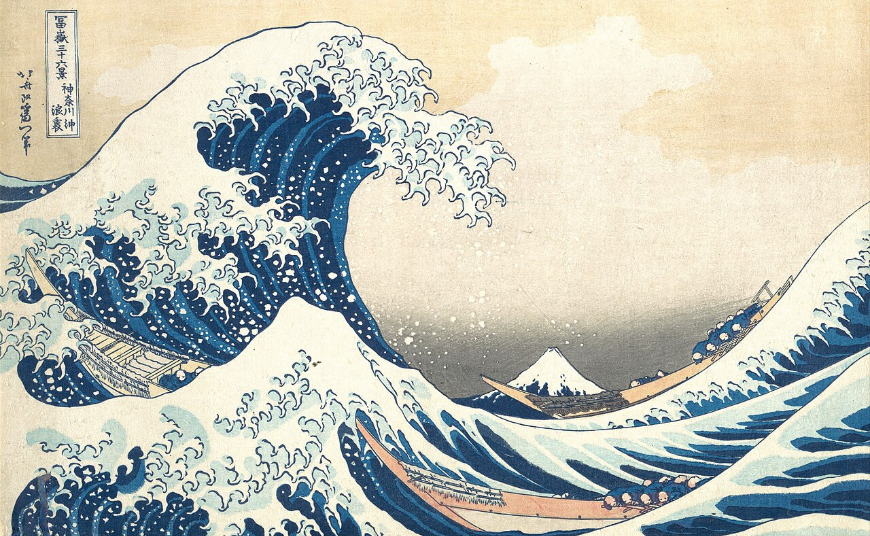 JapanismThe availability of Japanese woodcut prints in Europe in the mid nineteenth century led to a Japanese influence on Impressionist artists and their contemporaries. The term Japanism (sometimes spelt Japonism), describing this trend, was first used by Philippe Burty as the title of an 1872 journal article (Japonisme). Internationally, the most famous Japanese woodcut is Katsushika Hokusai’s The Great Wave (神奈川沖浪裏, 1831). JaponismJaponism is an alternative spelling of Japanism. Late ModernismLate Modernism is an alternative term for Structural Expressionism. LuminismThe label Luminism was applied retrospectively to a style of American painting from the mid nineteenth century, which was concerned with the representation of light in natural landscapes. Artists associated with this movement include John Frederick Kensett, Martin Johnson Heade, and Fitz Hugh Lane. Their work anticipated the later Impressionist fascination with light and nature, though unlike the Impressionists the Luminists painted with meticulous detail. Meta-Modernism
Timotheus Vermeulen and Robin van den Akker introduced their notion of Meta-Modernism in the journal paper Notes on Metamodernism in 2010. They discussed art that alternates between Modernist sincerity and Postmodernist detachment: “metamodernism oscillates between the modern and the postmodern. It oscillates between a modern enthusiasm and a postmodern irony, between hope and melancholy, between naiveté and knowingness, empathy and apathy, unity and plurality, totality and fragmentation, purity and ambiguity.”  ModernismeModernisme (also known as Catalan Modernism) emerged as an architectural and literary movement in Catalonia in the 1880s. It was influenced by Symbolism and the widespread Art Nouveau style, though it also had a political agenda: the promotion of Catalan cultural heritage, as distinct from the national Spanish culture. MusicalismMusicalism is one of several ersatz isms coined by Ronald Bergan in his book Film Isms... Understanding Cinema (2011). It describes the film genre more conventionally known as musicals. 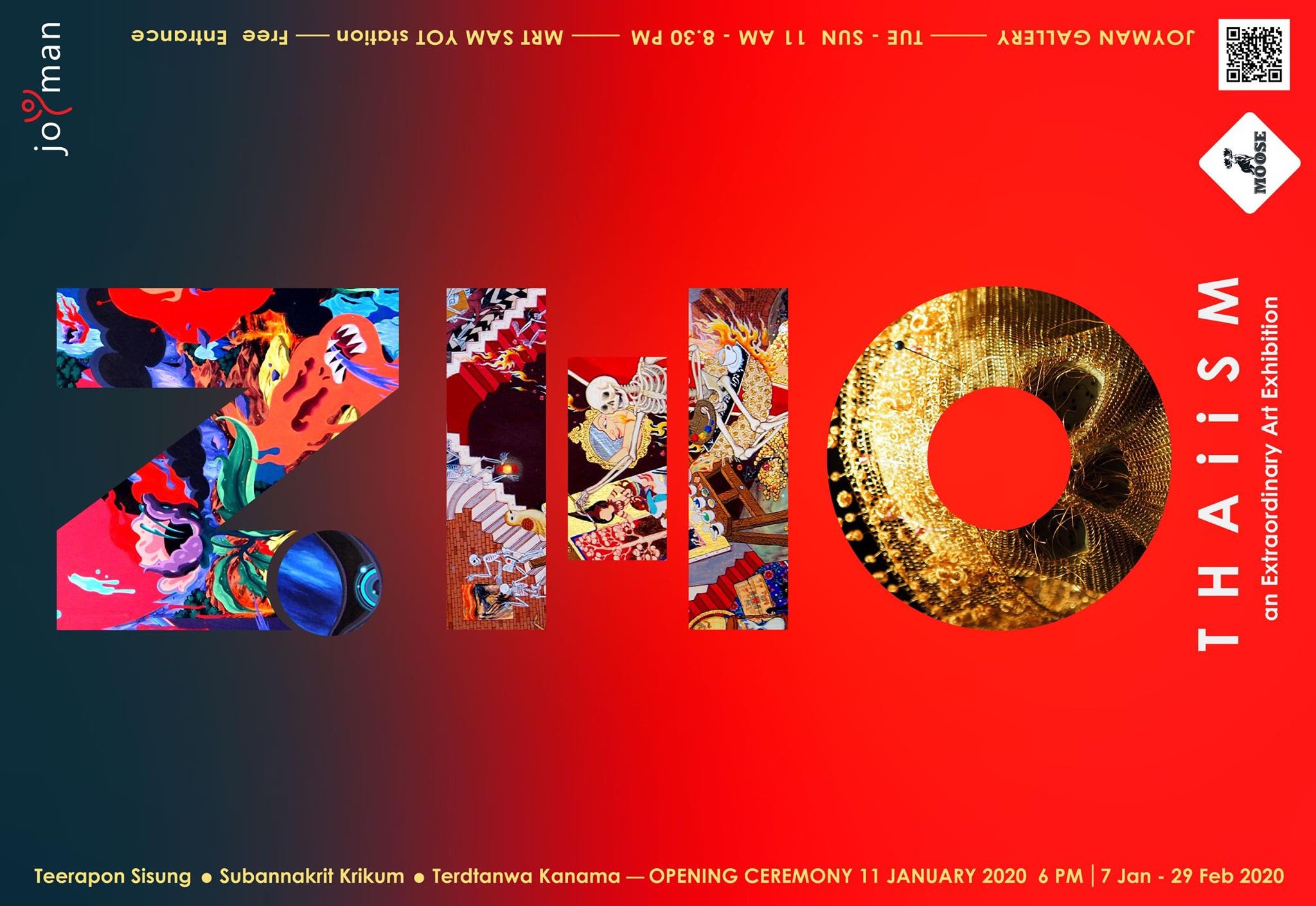 Neo ThaiismNeo Thaiism was the title of a 2020 exhibition in Bangkok of work by three young Thai artists — Subannakrit Krikum, Terdtanwa Kanama, and Teerapon Sisung — positioning them as the vanguard of a new artistic wave. Subannakrit’s exquisite paintings resembled miniature temple murals, though on closer inspection they revealed unexpected elements: Siam 2020, for example, featured modern artworks placed incongruously among traditional décor. Terdtanwa’s large canvases depicted apocalyptic imagery with a dystopian environmental message. Teerapon created delicate sculptures from woven copper thread. Neo-TraditionalismMaurice Denis published his Definition du neo-traditionalisme pseudonymously as Pierre-Louis, in 1890. Denis was originally a Symbolist, and Neo-Traditionalism (Neo-Traditionalisme) was his reaction against the mid nineteenth century Realist movement: “Everywhere those with aesthetic imagination triumph over those who attempt crude imitation, the emotions of Beauty triumph over the lies of Naturalism.” NeroismNeroism, like Dataism, was proposed by Icon magazine (no. 50) in August 2007 as a successor to Modernism. Both movements are rather dystopian, though they were also intended to be ironic. Neroism advocated hedonistic, selfish consumer behaviour, an acceptance of the failure of sustainability as a design concept. It surrendered to “the inferno of human consumption that is overwhelming the planet’s life-support systems.” New WavismNew Wavism is one of several ersatz isms coined by Ronald Bergan in his book Film Isms... Understanding Cinema (2011). It describes the national ‘new wave’ film movements that began in the 1950s.  PaparazzismNancy Jo Sales described “outrageous acts of paparazzism” in The Camera Wars, her article about paparazzi photographers for Vanity Fair in March 2003. In his book Paparazzi! Photographers, Stars, Artists in 2014, Clément Chéroux identified the characteristics of paparazzi photography: “there exists perhaps not a paparazzi art but a paparazzi aesthetic. This is the product of a group of technical determinants (the telephoto lens, the flash, the grain due to excessive enlargement)... and gestural habits (the hand in front of the face, the surprised look or averted gaze).” He also emphasised the significance of this paparazzi aesthetic: “Today, paparazzism has become a genre, a full-fledged stylistic category, and perhaps even one of the “-isms” of contemporary art.” ParallelismParallelism was coined by Ferdinand Hodler in Switzerland. Influenced by Symbolism, Hodler formulated his theory of Parallelism in an essay (Parallelitat) published in 1895: “Parallelism can be pointed out in different parts of a single object, looked at alone; it is even more obvious when one puts several objects of the same kind next to each other.” ParametricismParametricism is an alternative term for Tectonism. Performatism
Performatism, or the End of Postmodernism was published as a journal paper in 2000 and expanded, with the same title, as a book in 2008. According to author Raoul Eshelman, Performatism rejects the irony and intertextuality of Postmodernism in favour of art that invites emotional responses and remains self-contained. 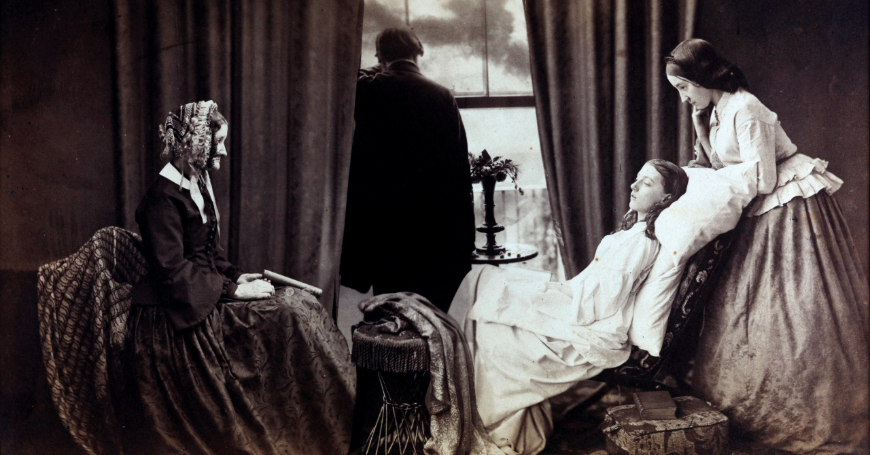 PictorialismPictorialism was an attempt to combine the traditional aesthetics of painting with the medium of photography, using soft-focus to create a painterly effect. The style was promoted by Henry Peach Robinson, in his 1869 book Pictorial Effect in Photography: Being Hints on Composition and Chiaroscuro for Photographers. 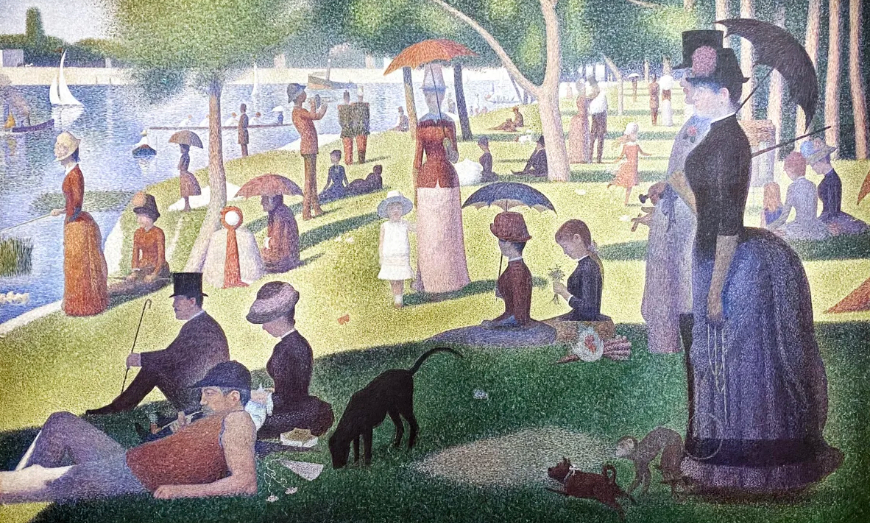 Pointillism
Georges Seurat and Paul Signac developed their theory of Chromoluminarism (Chromoluminarisme) in 1884, after discovering that individual dots of colour, when juxtaposed, were optically combined by the eyes of the viewer. Seurat, who was also associated with Symbolism, employed the technique for his vast canvas A Sunday on La Grande Jatte (Un dimanche après-midi à l'île de la Grande Jatte, 1886). Signac later defined the theory, which he called Divisionism (Divisionnisme), as the “optical mixture of solely pure pigments” in his 1899 book D'Eugène Delacroix au néo-impressionnisme (‘from Eugène Delacroix to Neo-Impressionism’). PrimitivismBetween 1891 and 1893, French artist Paul Gauguin lived in Tahiti, and his exoticised paintings of the local culture, notably the large-scale Where Do We Come From? What Are We? Where Are We Going? (D’où venons-nous? Que sommes-nous? Où allons-nous?, 1897), were later described as Primitivist. PropagandismPropagandism is one of several isms coined by Ronald Bergan in his book Film Isms... Understanding Cinema (2011). It describes the genre more conventionally known as propaganda films. Proto-Modernism
The architects and designers whose work prefigured the twentieth century Modernist movement were retrospectively labelled Proto-Modernists. The Wiener Werkstatte group, for example, produced Proto-Modernist decorative arts in Vienna at the start of the twentieth century. Pseudo-ModernismPseudo-Modernism is an alternative term for Digimodernism. RacialismRacialism is one of several ersatz isms coined by Ronald Bergan in his book Film Isms... Understanding Cinema (2011). It describes films in which race relations are a central theme, though the term was used inappropriately. Re-ModernismIn 2000, Billy Childish — who had founded Stuckism the year before — launched Re-Modernism with Charles Thomson. Re-Modernism called for a return to Modernist notions of traditional craftsmanship and authenticity, in contrast to the perceived artifice of Postmodernism. This reactionary movement was initiated with an exhibition in London titled The Stuckists, labelling Childish’s Stuckist movement as The First Remodernist Art Group. Joe Machine’s painting Diana Dors with an Axe (2000) was featured on the cover of the exhibition catalogue. Roboticlism
Roboticlism was a concept devised by Thai painter Noshpash Chaturongkagul, showcased at his exhibition Roboticlism from Unconscious Mind (จักรกลศิลป์จากจิตไร้สำนึก) in Bangkok in 2016. According to the exhibition catalogue, “Roboticlism is represented by robotic machines, mechanical armor, monsters and various creatures.” Romantic ConceptualismRomantic Conceptualism (Romantischer Konzeptualismus) was influenced by nineteenth century Neo-Romanticism and twentieth century Neo-Conceptualism. Jörg Heiser organised a Romantischer Konzeptualismus group exhibition in Nuremberg in 2007, though the movement’s roots can be traced back to the 1960s. Heiser emphasised art’s emotional content, in contrast to the perceived sterility of Conceptualism.  Rubikcubism
 utilises Rubik’s Cubes in reproducing iconic art works, resulting in a mosaic effect. The technique, and the name (a pun on Cubism, arguably the twentieth century’s most significant ism), were created by Invader for his Rubikcubism exhibition in Los Angeles, California, in 2005. Invader constructed sculptures of Space Invaders characters from Rubik’s Cubes, and also created Rubik’s versions of album covers and famous paintings. ScrewballismScrewballism is one of several ersatz isms coined by Ronald Bergan in his book Film Isms... Understanding Cinema (2011). It describes the film genre more conventionally known as screwball comedy. SeriousismExpressionist architect Bruno Taut founded the small magazine Frühlicht (‘early light’) in 1920, and, in its first issue, he wrote an article titled Nieder der Seriosismus! (‘down with seriousism!’). Taut criticised the earnestness (which he mockingly called Seriosismus, or Seriousism) of early twentieth century architecture: “Death to everything stuffy! Death to everything called title, dignity, authority! Down with everything serious!” In 2010, graphic designer Alvaro Velosa created a series of posters inspired by Taut’s article. Simultanism
Robert Delaunay’s art was classified by Guillaume Apollinaire as Orphism, though Delaunay himself developed the theory of Simultanism (Simultanéisme) as a progression from Orphism towards abstraction. Delaunay wrote several essays on Simultanism, including Simultanism: An Ism of Art (1925) in El Lissitzky and Hans Arp’s book The Isms of Art. SlapstickismSlapstickism is one of several ersatz isms coined by Ronald Bergan in his book Film Isms... Understanding Cinema (2011). It describes the film genre more conventionally known as slapstick comedy. Structural ExpressionismStructural Expressionism and Late Modernism both describe the architectural style known more commonly as High-Tech. Architects such as Norman Foster and Richard Rogers created buildings that resemble industrial edifices, with exposed steel frames and other symbols of technological innovation. The Centre Georges Pompidou in Paris, designed by Rogers with Renzo Piano, is one of the first and most famous examples of this style, featuring an exoskeleton of industrial pipes, ducts, and girders. SuggestivismSuggestivism, coined by Nathan Spoor, emphasises the viewer’s sensory response to art. Spoor, who curated the Suggestivism group exhibition in Santa Ana, California, in 2011, was influenced by writer Irving Babbitt. In his essay The New Laokoon (1910), Babbitt derided “suggestive” art, just as French critics had denounced Impressionism in the nineteenth century. Spoor embraced the criticisms identified by Babbitt and reappropriated them a hundred years later.  SustainismSustainism was a cultural philosophy coined by Michiel Schwarz and Joost Elffers. In their manifesto, Sustainism Is the New Modernism, published in 2010, they argued for a return to sustainability in design, technology, and economics. The book was essentially an exercise in graphic design, with striking logos and typefaces illustrating utopian slogans. SymbolismSymbolism (Symbolisme) emphasised imagination and spirituality as opposed to Realism. Symbolist art and literature depicted dream imagery and mythical figures, in contrast to Impressionism’s focus on natural scenes. Jean Moréas wrote a Symbolist manifesto, Le Symbolisme (1886), in which he emphasised the symbolic meaning of art: “scenes from nature, human activities, and all other real world phenomena will not be described for their own sake; here, they are perceptible surfaces created to represent their esoteric affinities with the primordial Ideals.” SynchromismSynchromism, one of the first avant-garde American art movements, was founded in 1912 by Stanton MacDonald-Wright and Morgan Russell. The artists believed that colours could be arranged harmoniously, like music, creating a synesthetic effect. The term was coined by Russell, who produced the first Synchromist painting, Synchromy in Green, in 1913. SynthetismSynthetism (Synthétisme) dates from an 1889 group exhibition organised by Paul Gauguin, featuring work by Gauguin and his fellow painters in Paris. The exhibition was titled L’Exposition de Peintures du Groupe Impressionniste et Synthétiste, to highlight the distinction between Synthetism and Impressionism.  TectonismIn a 2009 issue of Architectural Digest, Patrik Schumacher grandly announced “the enunciation of a new style: Parametricism.” His article, Parametricism: A New Global Style for Architecture and Urban Design, even argued that this new architectural style was the successor to the Modernist movement: “Parametricism is the great new style after modernism.” TeenagismTeenagism is one of several ersatz isms coined by Ronald Bergan in his book Film Isms... Understanding Cinema (2011). It describes exploitation films aimed at teenaged audiences. 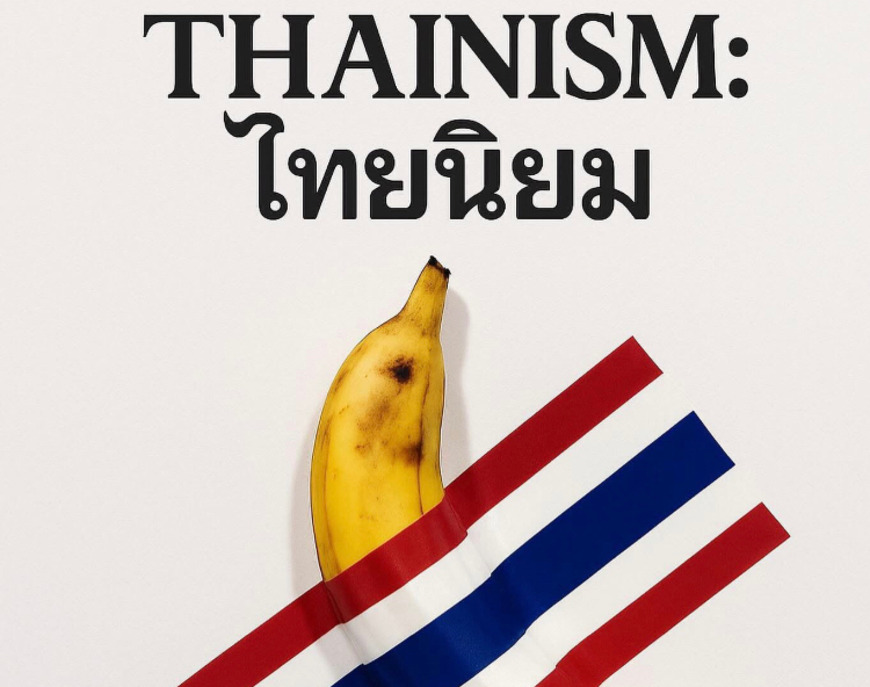 ThainismFor his month-long Everyday I Solo project in Bangkok in 2025, Anuwat Apimukmongkon staged a completely new exhibition every day. One of his daily exhibitions was Thainism (ไทยนิยม), inspired by Mauricio Cattelan’s infamous 2019 work Comedian. (Cattelan taped a real banana to a gallery wall, provoking a debate about the limits of conceptual art.) Anuwat modified Cattelan’s banana tape to comment on the corrosive effects of nationalism. TubismTubism (Tubisme), coined by the art critic Louis Vauxcelles in 1911, describes the work of Cubist artist Fernand Léger. Vauxcelles used the term derisively, just as Louis Leroy had done when he defined Impressionism in the nineteenth century. Léger’s paintings often contained cylindrical forms, leading to the pun on ‘Cubism’ and ‘tube’. WesternismWesternism is one of several ersatz isms coined by Ronald Bergan in his book Film Isms... Understanding Cinema (2011). It describes the film genre more conventionally known as westerns. 
Dateline Bangkok © 2012–2026 Matthew Hunt |